
Hormuz ship ban triggers a jump in US yields, fuels Fed hike bets
- US Treasury yields rise as Hormuz restrictions lift. Oil-driven inflation risks.
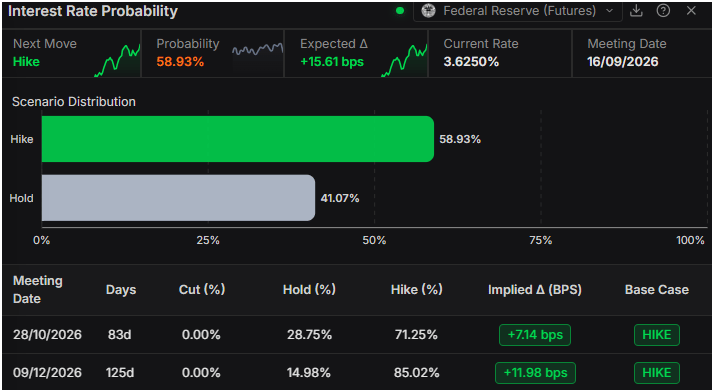
- Fed hike odds near 58% before Friday’s employment report.
- Jobless claims and layoffs signal labor market remains resilient.
US Treasury yields climb along the curve as the Oman-Iran deal, which banned US and Israeli ships, whether military or civilian, from entering the Persian Gulf, drives crude prices higher, and as traders await the latest employment report.
US yields climb as Iran-linked shipping risks lift crude prices, reinforcing inflation concerns before NFP
FARS news reported that Iran is blocking US and Israeli vessels from entering Hormuz, triggering a jump in oil prices. West Texas Intermediate (WTI), the US crude benchmark, rises by over 2.85%, trading at around $76.45 per barrel.
At the same time, reports of attacks on Saudi tankers in the Red Sea keeps inventors unease as Houthis continued to launch strikes against Saudi Arabia.
Money markets continued to speculate that the Federal Reserve (Fed) would raise rates at the September meeting. The odds stand near 58% for a 25 basis points (bps) rate hike, while there’s a 42% chance for keeping rates at the current 3.50%–3.75% range, according to Prime Terminal.
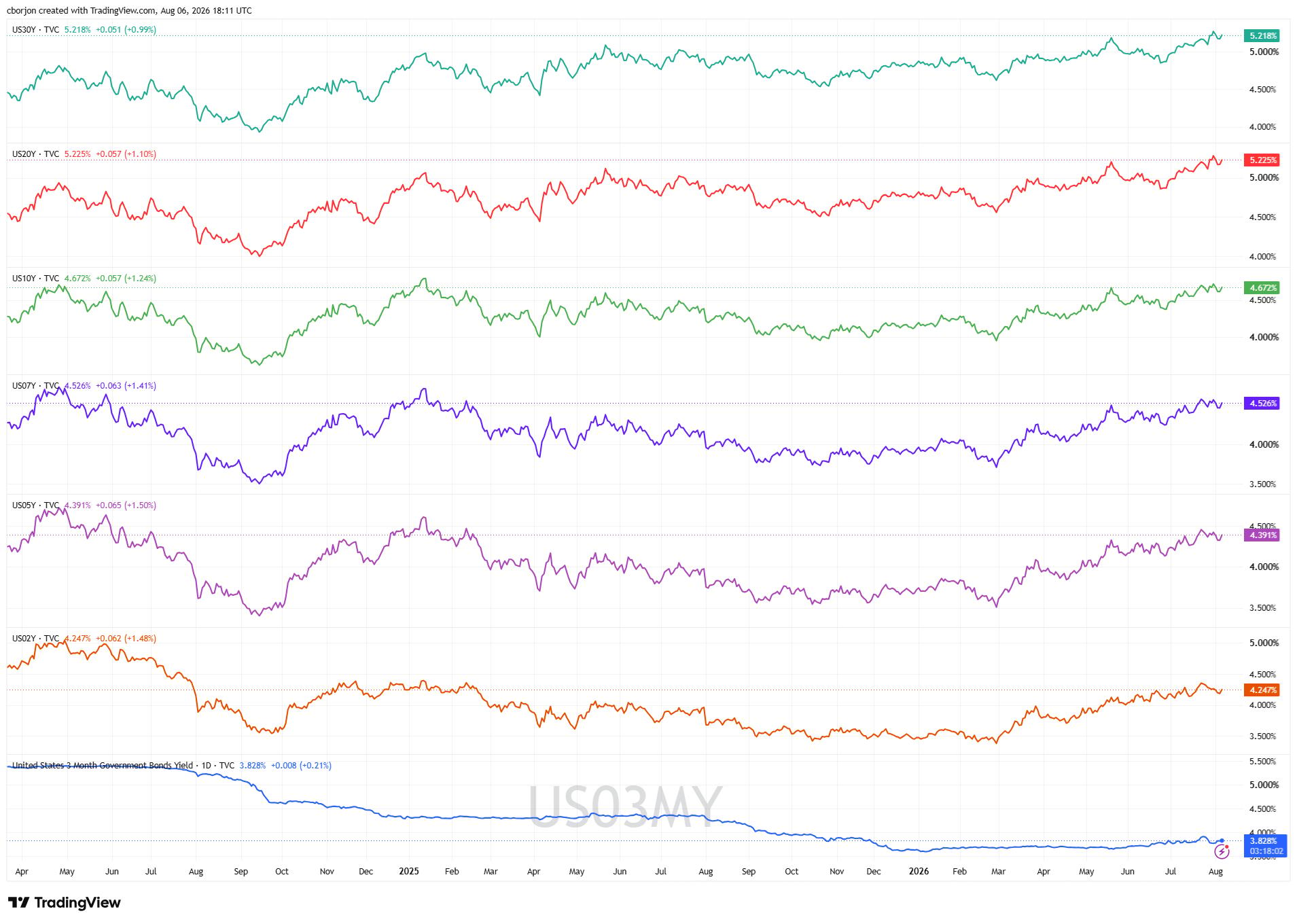
The US 10-year Treasury note is yielding 4.672%, up nearly six basis points, a signal that market participants had begun to price in a possible jump in inflation, which would warrant a rate hike by the Fed.
On Wednesday, San Francisco Fed President Mary Daly said she favors keeping monetary policy unchanged and that the central bank needs to gather additional data before committing to a decision. Meanwhile, Fed Governor Lisa Cook stated that she supported holding rates, but added that if disinflation stalls, she would be ready to act.
Data-wise, the US economic schedule showed that the labour market remains solid, as Initial Jobless Claims for the week ending August 1 came at 199K, below the 201K forecast by analysts. The US Challenger job cuts revealed that layoffs dropped to a two-year low in July, consistent with a stable labor market.
Traders' focus shifts to Nonfarm Payrolls, which are expected to come at 80K, almost double June’s print. Alongside this, the Unemployment Rate is projected to remain steady at 4.2%.
US Treasury yields – chart
Interest rates FAQs
Interest rates are charged by financial institutions on loans to borrowers and are paid as interest to savers and depositors. They are influenced by base lending rates, which are set by central banks in response to changes in the economy. Central banks normally have a mandate to ensure price stability, which in most cases means targeting a core inflation rate of around 2%. If inflation falls below target the central bank may cut base lending rates, with a view to stimulating lending and boosting the economy. If inflation rises substantially above 2% it normally results in the central bank raising base lending rates in an attempt to lower inflation.
Higher interest rates generally help strengthen a country’s currency as they make it a more attractive place for global investors to park their money.
Higher interest rates overall weigh on the price of Gold because they increase the opportunity cost of holding Gold instead of investing in an interest-bearing asset or placing cash in the bank. If interest rates are high that usually pushes up the price of the US Dollar (USD), and since Gold is priced in Dollars, this has the effect of lowering the price of Gold.
The Fed funds rate is the overnight rate at which US banks lend to each other. It is the oft-quoted headline rate set by the Federal Reserve at its FOMC meetings. It is set as a range, for example 4.75%-5.00%, though the upper limit (in that case 5.00%) is the quoted figure. Market expectations for future Fed funds rate are tracked by the CME FedWatch tool, which shapes how many financial markets behave in anticipation of future Federal Reserve monetary policy decisions.